
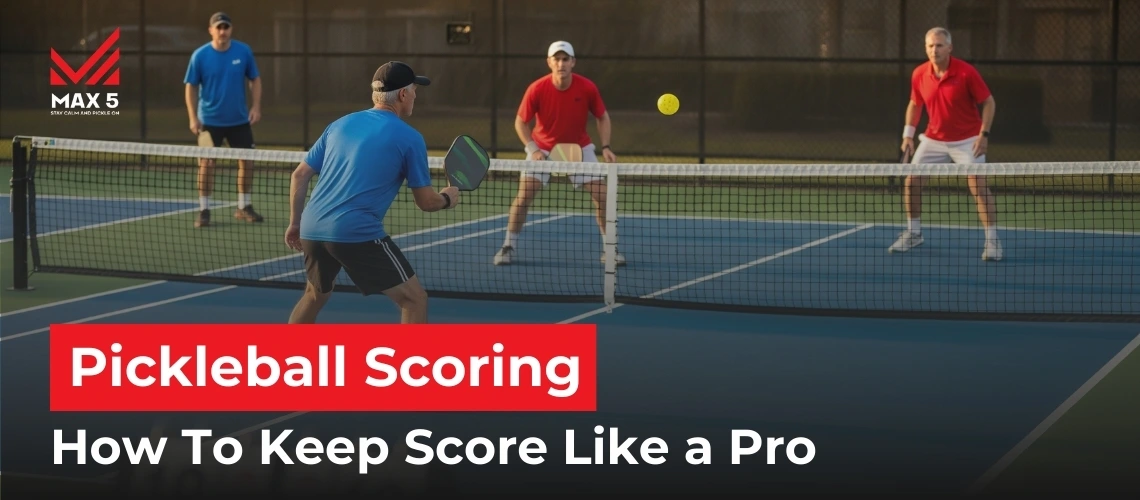
Pickleball Scoring: How To Keep Score Like a Pro
Are you new to pickleball and feeling overwhelmed by the scoring system? Or perhaps you’re a seasoned player looking to refine your understanding of pickleball scoring rules? Either way, mastering how to keep score in pickleball is essential for enjoying the game and avoiding disputes on the court. In this comprehensive guide, we’ll break down everything you need to know about pickleball scoring, from the basics to advanced strategies. By the end, you’ll be equipped to track points confidently and elevate your gameplay.
Pickleball, a fast-paced paddle sport that combines elements of tennis, badminton, and ping-pong, has exploded in popularity. But unlike other racquet sports, its scoring can seem tricky at first. This blog will cover the pickleball points system, step-by-step instructions on how to score in pickleball, and tips to ensure fair play. Whether you’re playing singles or doubles, understanding these rules will help you focus on the fun rather than the scoreboard.
Understanding the Basics of Pickleball Scoring
Before diving into how to keep score, let’s establish the fundamentals. Pickleball games are typically played to 11 points, but only if a team wins by at least 2 points. If the score reaches 10-10, the game continues until one side leads by 2. This “win by 2” rule prevents endless rallies and keeps games moving.
Key Terms in Pickleball Scoring
- Point: Awarded when a team wins a rally.
- Rally: The exchange of the ball until it goes out of bounds or a fault occurs.
- Serve: The starting shot, which must be underhand and diagonal.
- Side Out: When the serving team loses the serve, switching to the opposing team.
In pickleball, scoring is only done by the serving team. This means points are only added to the server’s score. The receiving team doesn’t score points; they just aim to win the rally to gain the serve.
How to Score in Pickleball: Step-by-Step Guide
Now, let’s get into the nitty-gritty of how to keep score in pickleball. We’ll cover both singles and doubles, as the rules differ slightly.
Scoring in Doubles Pickleball
Doubles is the most common format, and its scoring is straightforward once you get the hang of it. Here’s how it works:
Starting the Game: The game begins with a coin toss or agreement to decide who serves first. The serving team starts at 0-0-2 (score-server-receiver-starting server). The “2” indicates the second server on the team.
Serving Sequence: In doubles, each team has two servers. The first server serves from the right side (even scores) or left side (odd scores). If they win the rally, they score a point and switch sides. If they lose, the serve goes to the second server on their team, who serves from the opposite side.
Scoring Points: Only the serving team can score. For example, if the score is 5-3-2 (server’s score-receiver’s score-second server), and the serving team wins the rally, it becomes 6-3-2. If they lose, it switches to 5-3-1 (now the first server is up).
Side Out: When the serving team loses both serves (i.e., the score reaches -1), it’s a side out, and the serve goes to the other team.
Winning the Game: First to 11 points with a 2-point lead. If it goes to 10-10, play continues until someone leads by 2.
Pro Tip: Use a scorecard or app to track the three numbers: server’s points, receiver’s points, and server number (1 or 2).
Scoring in Singles Pickleball
Singles pickleball scoring is simpler since there’s only one player per side.
Starting the Game: Begin at 0-0, with the server serving from the right side for even scores and left for odd.
Serving and Scoring: The server can score on every rally they win. If they lose the serve, it goes to the opponent. No “second server” concept here.
Winning: Same as doubles: 11 points with a 2-point lead.
All in one: if you are fully prepared on how to score in pickleball but do not have a good paddle, your performance may still be limited. Here is the perfect guide on how to choose a pickleball paddle for beginners.
Common Mistakes in Pickleball Scoring and How to Avoid Them
Even experienced players slip up. Here are some frequent errors and fixes:
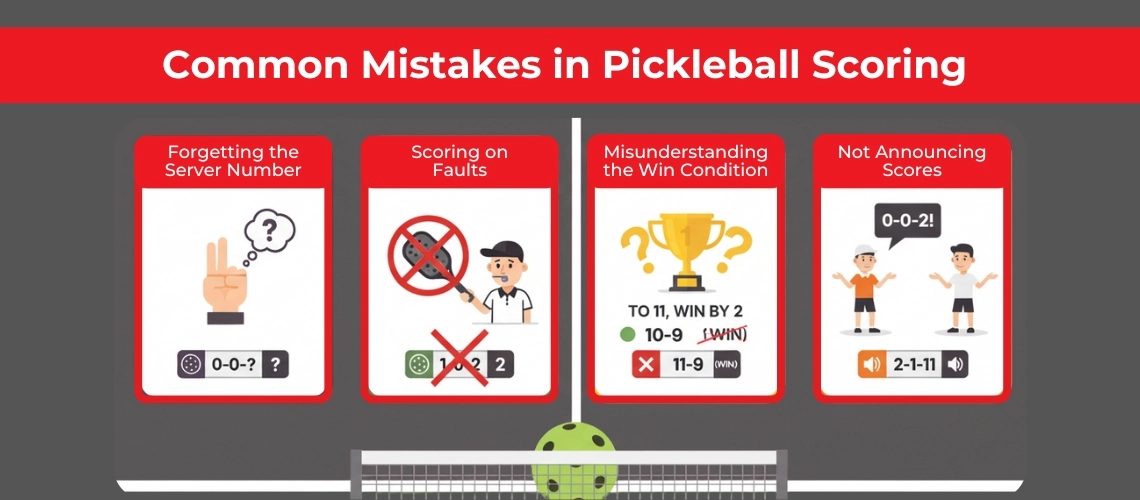
- Forgetting the Server Number: In doubles, always announce the full score (e.g., “5-2-1”). Mistaking this can lead to confusion. Solution: Pause after each point to confirm.
- Scoring on Faults: Points are only scored on won rallies, not faults. A fault (like stepping into the kitchen) just ends the rally. Tip: Know the rules of the non-volley zone (kitchen) to avoid penalties.
- Misunderstanding the Win Condition: Thinking the game ends at 11 exactly. Remember, it must be by 2. Avoid: Practice with a friend and simulate close scores.
- Not Announcing Scores: Always call out the score loudly. This prevents disputes and keeps the game fair.
By being mindful of these, you’ll reduce arguments and enjoy smoother matches.
Advanced Tips for Mastering Pickleball Scoring
To go beyond basics, incorporate these strategies:
- Psychological Edge: As the server, use the score to your advantage. At 10-8, pressure the opponent by serving aggressively.
- Tracking in Tournaments: In official play, use electronic scoreboards or have a dedicated scorer. Apps like “Pickleball Scorekeeper” can help.
- Adapting to Opponents: If playing against beginners, explain scores patiently. For pros, anticipate quick switches.
- Practice Drills: Set up scoring scenarios in practice. For instance, play to 5 points and focus on serving accuracy.
Insight: Scoring isn’t just about numbers; it’s about momentum. A well-placed serve can shift the game.
Why Accurate Scoring Matters in Pickleball
Proper pickleball scoring ensures fair play and enhances the social aspect of the sport. It prevents misunderstandings and allows players to strategize effectively. Plus, with pickleball’s growth—over 4 million players in the US alone—knowing these rules can make you a better teammate or coach.
Conclusion: Start Scoring Like a Champion
Mastering pickleball scoring is your gateway to becoming a confident player. From understanding the points system to avoiding common pitfalls, this guide covers everything you need. Remember, the key is practice: grab a paddle, hit the court, and apply these rules. Whether you’re aiming for casual fun or competitive play, accurate scoring will keep the game enjoyable.
If you’re ready to dive deeper by choosing the best pickleball paddle, check out our Max 5 paddle sets. These paddles help you to score well in a precise manner. What’s your biggest scoring challenge? Your story will be appreciated. Share in the comments below!