
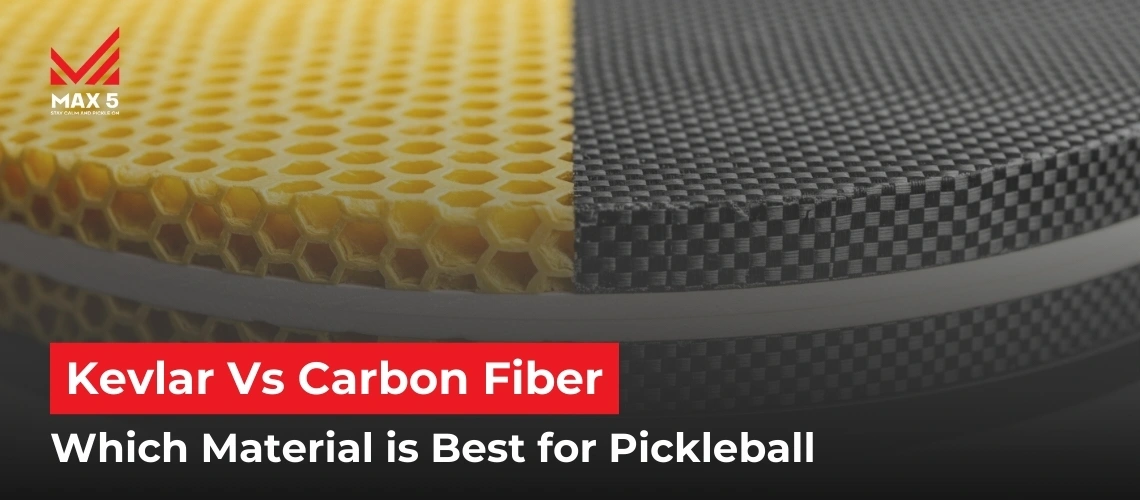
Kevlar Vs Carbon Fiber: Which Material is Best for Pickleball
Whenever you pick a pickleball paddle, the first thing you think which material is best: Kevlar vs carbon fiber. If you’re curious about the difference between Kevlar and carbon fiber, you’re about to learn some fascinating facts that can help you to decide which material is best for your play. The important thing is that your paddle’s face material directly impacts your drink, drives, and third-shot drop. The surface material of a Pickleball paddle majorly affects how the paddle feels and performs. Your choice should match your style, skill level and priorities.
In this Max 5 blog, we will give you complete details about the Kevlar and carbon fiber based on our expertise because we are the manufacturer of our own brand.
What Is Carbon Fiber in a Pickleball Paddle
Carbon Fiber paddles are constructed by weaving carbon fibers into sheets, layering them on a polymer honeycomb core structure, then sealing with perfect resin. The outcome is a stiff, durable, textured paddle face that excels in transferring energy from your swing to the ball.
Benefits of Carbon Fiber
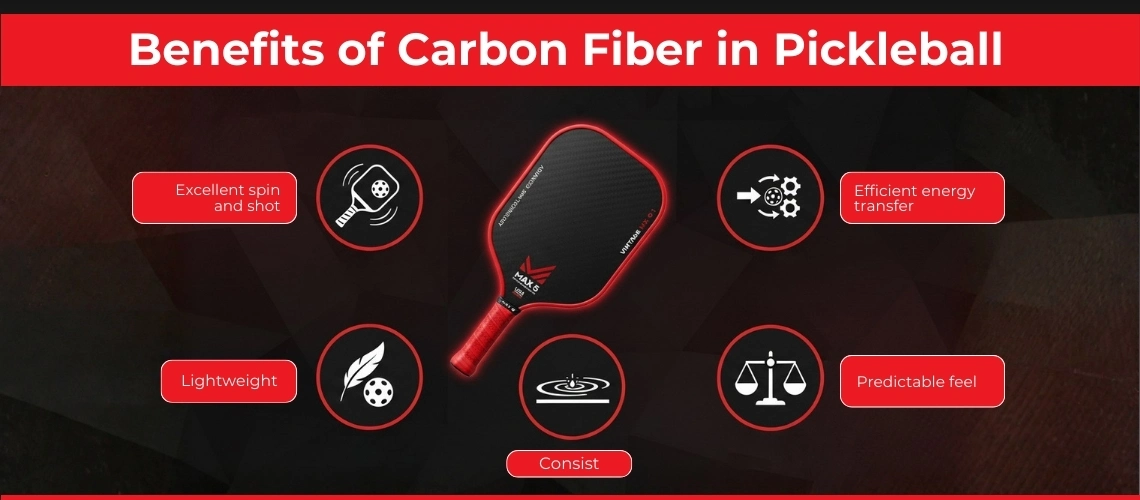
Carbon fiber dominates competitive play because it offers:
- Excellent spin and shot
- Efficient energy transfer
- Lightweight
- Consist
- Predictable feel
The material’s stiffness means less energy loss at impact, translating to precise drink and angled volleys. It is ideal for advanced and intermediate players, spin/spin-heavy baseline players, quick net exchange, aggressive drives and players who value precision.
Max5 Tip: Pair carbon paddles with MX Pro Pickleballs; their 40-hole seamless design maintains stable flight even under heavy topspin.
Kevlar Face Material in Pickleball Paddles?
Kevlar-faced paddles take advantage of the material’s strength, resilience, and built-in vibration-dampening qualities. Kevlar offers a different feel compared to carbon fiber, softer, slightly more forgiving, and often more durable under heavy use.
Why Kevlar Is Gaining Popularity:
Kevlar paddles surged in visibility as pros experimented with hybrid carbon-Kevlar paddles in 2024. (HeliosPickleball.com)
Players appreciate:
- Immense strength
- Durability and longevity
- Comfortable feel
- Vibration Damping
- Control and balance
Kevlar maintains strong performance even after hundreds of hours, though cosmetic wear appears sooner than carbon.
Best Use Cases
Kevlar-based pickleball paddles shine when the game demands speed, power, and explosive counter-attacks.
Kevlar is ideal if you rely on:
- Drive winners
- Heavy topspin forehands
- Body-shot attacks
- Singles play
- Fast net finishes
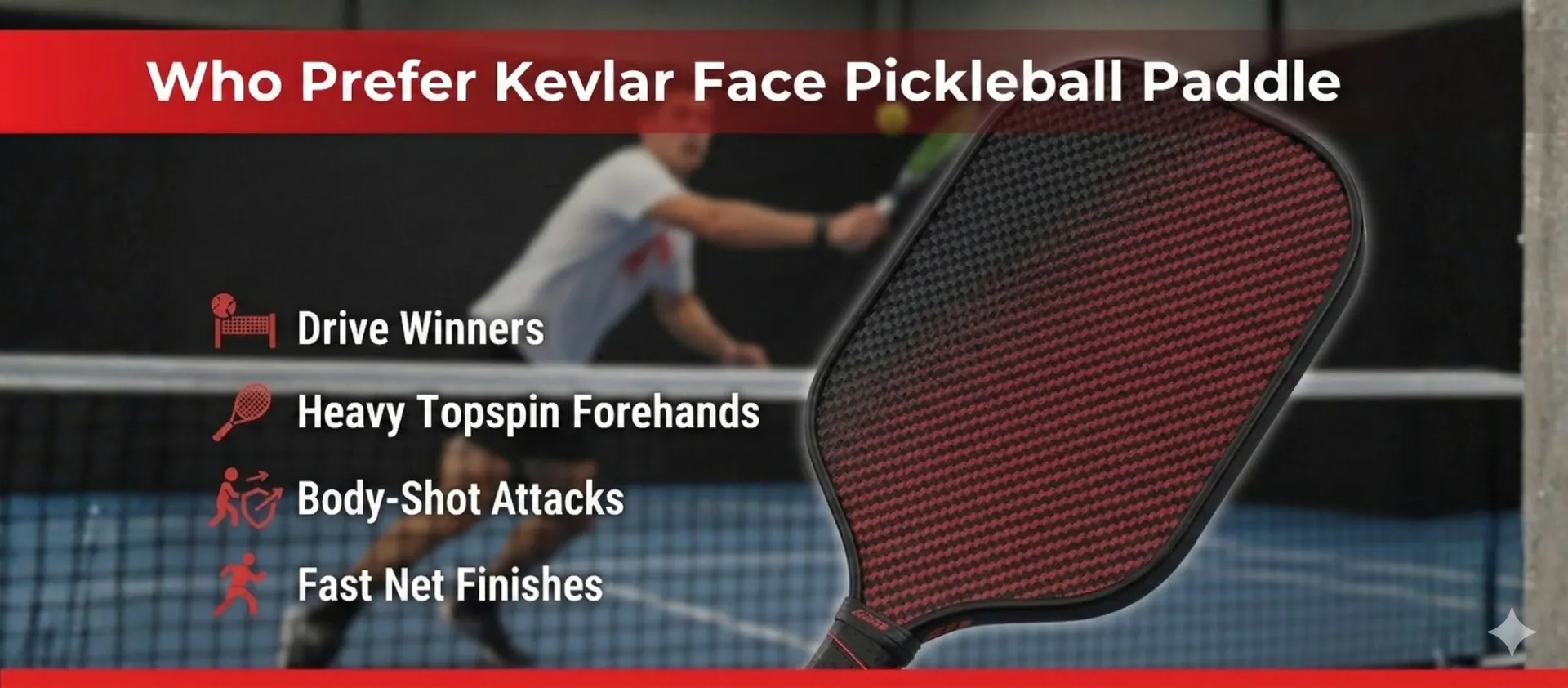
Players who hit aggressively will appreciate how Kevlar’s trampoline-like rebound rewards fast, confident swings.
For Your Information: Hudef Sport reports that professional players using Kevlar and carbon fiber pickleball paddle blends experience 10-15% faster ball exit velocity and 5-7% more power on smashes, making them ideal for finishing points at the net.
Kevlar vs Carbon Fiber: Quick Comparison Table
Here are the complete differences of Kevlar vs carbon fiber pickleball paddles. You can get a complete idea from this table:
Aspect | Carbon Fiber | Kevlar |
Strength | High stiffness; twice as strong as steel by weight. | Exceptional toughness; up to 100x stronger than stainless steel by weight. |
Durability | Impact-resistant but can feel rigid over time | Superior abrasion resistance; very long-lasting |
Weight | Lightweight for quick maneuvers. | Slightly heavier, adding stability. |
Power | Excellent energy transfer for powerful drives. | Balanced power with more forgiveness |
Control | Precise and consistent for spin-heavy games. | Forgiving with better vibration dampening. |
Spin | Gritty surface grips the ball well. | Good spin, but a softer feel enhances touch. |
Best For | Players seeking speed and precision. | Power hitters who value comfort and longevity. |
Cost Consideration | More affordable options are available. | Often premium due to specialized build. |
Note: By examining the performance, feel, and durability of Carbon and Fiberglass, players can explore their options and pick our guide to discover the best materials for pickleball paddles, helping them make an informed choice that matches their playing style and preferences
Performance Breakdown of Kevlar and Carbon Fiber
Diving deeper into the kevlar vs carbon fiber pickleball paddle battle, let’s break down how they perform head-to-head.
- Power: Carbon fiber offers explosive shots thanks to its stiffness, while Kevlar provides a more forgiving feel, making sustained aggressive play easier on the arm.
- Control: Kevlar’s flexibility shines in touch shots, while carbon fiber provides laser-like precision for drink, drop, and angled volley
- Spin: Both grip well, but carbon fiber’s grit often wins for topspin lovers.
- Durability: Kevlar wins for abrasion resistance, making it ideal for rough or outdoor courts.
- Vibration Dampening: Kevlar absorbs shock better, reducing arm fatigue, an advantage noted by MAX5 pros for longer playing sessions.
Carbon Fiber vs Fiberglass vs Kevlar Fiber
It’s not always just carbon fiber or Kevlar; many paddles (including mid-range) use fiberglass or hybrids, so it’s worth seeing where Kevlar and carbon fiber stand overall.
- Fiberglass: Usually softer and more forgiving, great for beginners or those transitioning from wood paddles. Offers decent control but lacks the pop and spin of carbon fiber.
- Carbon Fiber: Lightweight, powerful, spin-rich, ideal for intermediate to advanced players who want aggressive play.
- Kevlar (or Kevlar blends): Balanced or control-oriented, extremely durable, comfortable, forgiving, and ideal for long matches or players seeking consistent control and comfort.
Many paddle makers blend materials to cover a wider range of play styles
Why carbon fiber is popular:
Carbon Fiber stays preferred for stiff, highly responsive paddle faces, thanks to its high stiffness-to-weight ratio, producing a “crisp,” precise rebound that many players love.
Hybrid Pickleball Paddles
Hybrid paddles mixing Kevlar and carbon fiber are becoming popular because they attempt to bring out the best of both worlds:
- Carbon fiber adds power, stiffness, and spin potential.
- Kevlar adds comfort, vibration dampening, control, and durability.
- Result: a paddle suitable for versatile playstyles, baselining, net play, soft shots, and hard shots all in one.
For many players, this hybrid approach hits the sweet spot, especially if you don’t want to commit strictly to “power only” or “control only.”
Final Verdict: Which One Should You Buy
Choose Carbon Fiber If:
- You prioritize spin and control
- You play a finesse-heavy game (drops, resets, dinks)
- You want maximum surface durability
- You’re upgrading from fiberglass
Best Example:
Max 5 Vintage MX-0.1 Carbon Paddle (USAPA-approved, raw T700 carbon under $100)
Choose Kevlar If:
- You’re a power hitter.
- You need vibration dampening for comfort.
- You play aggressive singles or attacking doubles.
- You don’t mind trading some spin for explosive pop.
Choose a Hybrid If:
- You play an all-court style
- You want the best blend of spin + pop
- Budget isn’t your primary concern
Conclusion
Choosing between Kevlar vs carbon fiber comes down to your playstyle. Carbon fiber excels in spin, precision, and fast control, making it ideal for players who rely on finesse, accurate drops, and sharp volleys. Kevlar delivers superior durability, comfort, vibration dampening, and powerful rebound that benefits aggressive hitters and singles players. Hybrid paddles combine both traits for a balanced all-court approach. There is no universal “best” material; the right choice depends on how you hit the ball and what feel you prefer. Consider your strengths, needs, and playing style to select the paddle that elevates your game.
So next time you’re shopping for a paddle, think about how you play and pick the surface that complements your game.
Disclaimer:
The information in this blog is for general guidance and may vary based on your paddle brand or playstyle. Always test equipment yourself before making a final choice.