
How to Choose a Pickleball Paddle for Beginners
If you are a beginner in pickleball, you must figure out how to choose a pickleball paddle for beginners. It is one of the most important steps. The right paddle helps you learn control, spin, and consistency without hurting your arm or wrist.
Many beginners often ask: “What are the best pickleball paddles for beginners?”, “What weight, grip size, or core material should I pick?” In this guide, you’ll get answers to all those, plus recommendations for beginner pickleball paddles, side-by-side spec comparisons, and tips based on what real new players tend to search for.
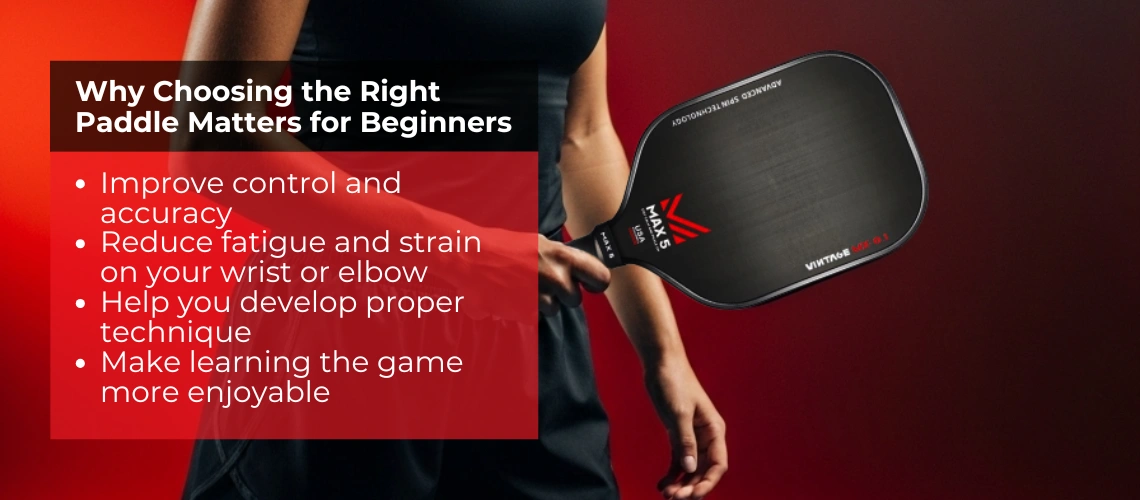
Why Choosing the Right Paddle Matters for Beginners
Choosing the best beginner paddle for pickleball makes a big difference in your enjoyment and progress. For beginners, the right paddle helps:
- Improve control and forgiveness on off-center hits.
- Helps you learn dinks, volleys, and serves without frustration.
- Reduce strain on the wrist, elbow, and shoulder.
- Build confidence at both the baseline and the kitchen line.
With the wrong paddle, you might:
- Hit more mishits (less sweet spot/forgiveness)
- Struggle to control direction and spin
- Fatigue your wrist, elbow, and shoulder
- Lose confidence and enjoyment
With the good paddle, you focus on strokes and footwork, rather than fighting against your gear. That’s why every beginner should understand how to choose a pickleball paddle before buying. Before you hit the court, make sure to check out our guide on pickleball rules every beginner should know. It pairs perfectly with this paddle guide and helps you get started the right way.
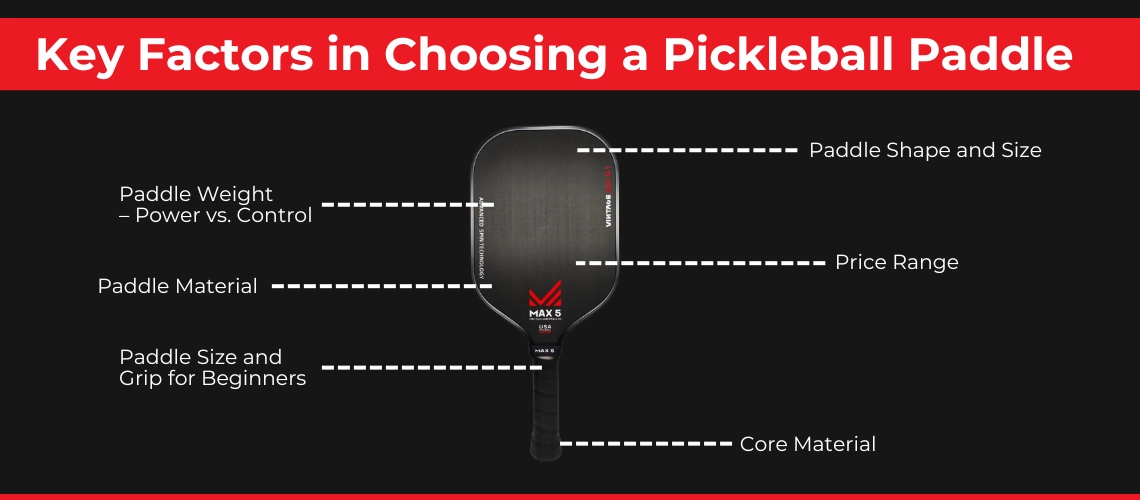
Key Factors in Choosing a Pickleball Paddle
Here are all the technical and practical features you should watch, with guidance for new players.
1. Paddle Weight – Power vs. Control
Weight is the first factor you’ll notice when picking up a paddle.
- Lightweight paddles (7.0-7.8 oz): Easier to swing, great for control and quick reactions. These are the best choices for beginners learning resets and dinks.
- Midweight paddles (7.8-8.4 oz): Balanced mix of power and control. Often, the “sweet spot” for new players is once they’ve played a few matches.
- Heavy paddles (8.5 oz+): Provide power but can cause strain. Not recommended for beginners.
For most beginners, a lightweight pickleball paddle or a balanced midweight option is ideal.
2. Paddle Size and Grip for Beginners
Pickleball paddle size for beginners should be a widebody (≈ 8”) because it gives a larger sweet spot and forgives mishits.
Paddle shape/size for beginners:
- A widebody paddle (≈ 8″ width) gives a larger sweet spot, forgiving more off-center hits.
Handle Length:
- Short (4.5-5.0”) → Easier for one-handed play.
- Long (5.3”+) → Better if you use a two-handed backhand.
Grip Circumference:
- Small (~4”) → For smaller hands.
- Medium (~4.25-4.5”) → Works for most players.
- Large (~4.75”) → For larger hands.
Choosing the right grip comfort, handle length, and correct grip size is critical; a paddle that slips or twists will negatively impact your play.
3. Paddle Shape and Size
- Standard Shape (16” x 8”): Balanced and great for beginners.
- Elongated Paddles: Longer reach but smaller sweet spot, better for advanced players.
- Widebody Paddles: Larger sweet spot, excellent for beginners still working on consistency.
Beginner Tip: A widebody paddle is often the best choice for learning.
4. Paddle Material
Pickleball paddles are made from different materials, which affect performance and price:
- Wood Paddles: Affordable and durable, but heavy. Best for casual or recreational play.
- Composite Paddles: Made of fiberglass or carbon fiber with a polymer core. Lightweight, balanced, and ideal for beginners.
- Graphite Paddles: Lightweight with excellent touch and control. More expensive but worth it if you’re serious about improving.
Beginner Tip: A composite paddle offers the best value and playability for new players.
5. Core Material
The paddle core also impacts performance:
- Polymer Core: Quiet, soft feel, great for control. Most beginner paddles use this.
- Nomex Core: Hard, loud, and powerful—better for advanced or competitive play.
- Aluminum Core: Lightweight and good for control, but less durable.
Beginner Tip: Choose a polymer core for a beginner-friendly balance.
6. Price Range
- Budget Paddles ($30–50): Good for casual players testing the sport.
- Mid-Range Paddles ($50–100): Best for beginners who plan to play regularly.
- Premium Paddles ($100+): High-performance paddles with advanced technology.
Beginner Tip: A mid-range composite paddle is usually the sweet spot for beginners.
Common Mistakes Beginners Make When Choosing a Paddle
- Going too heavy: Causes fatigue and risk of elbow injuries.
- Ignoring grip size: Leads to poor control and discomfort.
- Buying the cheapest paddle: May not perform well or last long.
- Over-investing too soon: You don’t need a $200 paddle to start.
- Not trying paddles before buying: If possible, borrow or demo paddles before deciding.
Conclusion
If you’re asking how to choose a pickleball paddle for beginners, focus on weight, grip, core, and face before brand or looks. Start with a light to midweight, widebody paddle, comfortable grip, 16 mm polymer core, carbon/graphite face, and make sure it’s USAPA-approved.
The Max5 Vintage MX 0.1 Carbon Paddle, paired with MX Pro Pickleballs and maintained using the MX Clean Eraser, gives you an ideal starter setup built for spin, control, and growth.
As you gain experience, your needs might evolve. But with the right first paddle, you’ll learn more, enjoy more, and develop your game faster.
Disclaimer:
This guide is for informational purposes only. All product details and specifications are accurate; some visuals may be AI-generated or illustrative.